
Shifters
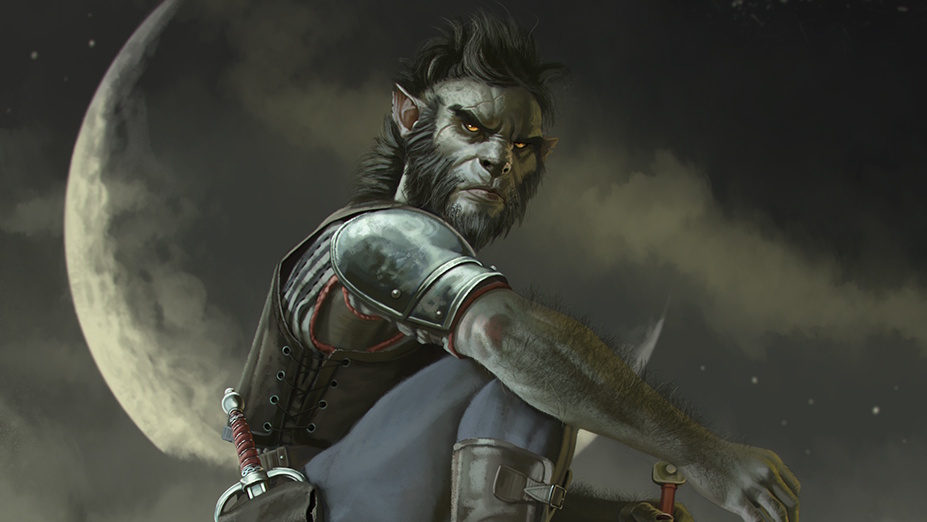
The Tavaska, often called Shifters by settlers of the Concord, are among the oldest peoples of Shahoya. Their communities existed long before the arrival of the Concord and before the rise of the serpentfolk kingdoms.
In ancient times, peoples related to the Tavaska ranged farther south into the lands that would eventually become Zalthyx. Those southern communities developed their own customs and relationships with the animals and spirits around them. Reptilian and serpentine traits became increasingly prominent in their Shifting, distinguishing them from many of their northern relatives even before the peoples of the two regions finally separated.
Tavaska traditions know Yssarel as Kihowa, the Mother-of-Paws, and remember their ancestors as her First Children. They teach that Kihowa gave them the gift of Shifting so they could share in the qualities of the animals around them and live as part of the lands she had created.
Their oldest stories remember Lessarith as Zhanna, Snake-in-Smoke. Tavaska tradition holds that Zhanna approached their southern kin with promises of greater power and freedom from Kihowa's teachings. Those who accepted her influence were transformed further and became the ancestors of the first Ssith'katha.
The Tavaska remember this transformation as the final separation between peoples who had once shared common ancestry. Their stories emphasize the danger of seeking mastery over the living world and remain one of the oldest sources of tension between Tavaska and serpentfolk traditions.
The Tavaska who remained across Shahoya continued to develop their own tribal lineages. Ten major traditions survive today, each associated with a particular expression of Shifting and with sacred animals important to its history.
Identity and Culture
Tavaska are humanoid, though most possess visible animal traits. Fur, unusual eyes, pronounced teeth, claws, and differences in the shape of the ears or face appear to varying degrees between individuals and families.
These features become more pronounced when a Tavaska Shifts. The change remains partial, with the form of the transformation determined by the Shifting Aspect inherited through their tribal lineage.
Shifting is understood as part of Kihowa's blessing. Children usually learn to recognize and control the change as they grow, guided by relatives and other experienced members of the tribe.
Outsiders unfamiliar with the Tavaska sometimes mistake Shifting for lycanthropy. Tavaska themselves make a clear distinction between their inherited gift and the curses or diseases associated with werecreatures.
Sacred animals carry ancestral and spiritual significance within each tribal tradition. Several animals may be associated with the same lineage when they reflect qualities connected to its inherited Shift. Their meaning can vary between tribes according to local history and environment.
Kihowa is honored throughout Tavaska culture, while religious practice also reflects the places in which individual tribes live. Communities maintain relationships with local spirits, and the beings important to one part of Shahoya may have little place in the traditions of another.
Much of Tavaska history is preserved orally. Stories carry family histories, old agreements, migrations, encounters with spirits, and memories of the land across generations. Some tribes supplement these traditions with physical records or memorial objects.
There is no single Tavaska pattern of settlement. Some tribes have occupied the same territories for generations, while others move between established places according to season and local conditions.
The Tavaska Tribes
The Tavaska recognize ten major tribal traditions among the peoples of Shahoya. Each carries an inherited Shifting Aspect and maintains associations with several sacred animals.
Communities within the same tradition can differ considerably. Shared ancestry and Shifting do not require identical customs, and local history has shaped each tribe in its own way.
Stonebacks, Makawa
The Stonebacks carry the Beasthide Aspect. Bison, great bears, and musk oxen are among their sacred animals.
Their oldest communities are associated with plains, canyon valleys, and old riverlands. Makawa is traditionally understood as Those Who Endure.
Bloodfang, Kotahei
The Bloodfang carry the Longtooth Aspect. Wolves, mountain cats, and wolverines commonly appear in their traditions.
Bloodfang tribes are particularly associated with forested and mountainous parts of Shahoya. Kotahei is traditionally understood as Fangs of the Ancestors.
Swiftwinds, Shanowa
The Swiftwinds carry the Swiftstride Aspect. Antelope, coyotes, and swift-flying birds are common among their sacred animals.
Their traditions developed most strongly across open country and the borders between grassland and forest. Shanowa is traditionally understood as Fleet Spirits of the Plains.
Spiritwatchers, Tahuna
The Spiritwatchers carry the Wildhunt Aspect. Owls, foxes, and wolves are common within their traditions.
Many Spiritwatcher communities preserve extensive knowledge concerning local spirits and the signs associated with their presence. Tahuna is traditionally understood as Those Who Walk Between Worlds.
Thornclaws, Chenoa
The Thornclaws carry the Razorclaw Aspect. Lynx, bobcats, and hunting birds are among their sacred animals.
Their oldest traditions are associated with dense forests and secluded valleys. Chenoa is traditionally understood as Silent Hunters.
Moonseers, Ayona
The Moonseers carry the Dreamsight Aspect. Owls, deer, and ravens appear frequently within their traditions.
Dreams hold particular significance in many Moonseer communities, especially when understood alongside family history and local spiritual traditions. Ayona is traditionally understood as Eyes of the Dreaming.
Thunderhorns, Kowaresh
The Thunderhorns carry the Gorebrute Aspect. Bison, boars, and moose are commonly associated with the tradition.
Their communities developed most strongly across open plains, exposed uplands, and broad river country. Kowaresh is traditionally understood as The Storm's Charge.
Skycallers, Kayinah
The Skycallers carry the Swiftwing Aspect. Eagles, falcons, and other great birds hold particular importance within their traditions.
Their oldest communities are associated with cliffs, canyons, and open highlands. Kayinah is traditionally understood as Those Who Ride the Wind.
Deepwardens, Navairo
The Deepwardens carry the Truedive Aspect. Otters, kingfishers, and large river fish commonly appear among their sacred animals.
Their traditions are most strongly associated with rivers, lakes, wetlands, and coastal waters. Navairo is traditionally understood as Keepers of the Waters.
Cliffcallers, Vashana
The Cliffcallers carry the Cliffwalk Aspect. Mountain goats, bighorn sheep, and high-flying birds are common within their traditions.
Their communities have long been associated with steep highlands, cliffs, and alpine regions. Vashana is traditionally understood as Voices of the High Stones.
Tavaska Across Eldareth
The oldest and most established Tavaska territories remain in Shahoya, where tribal histories are closely connected to particular regions of the land.
Tavaska communities often preserve detailed knowledge of the places they inhabit. Routes, water sources, burial grounds, seasonal resources, and spiritually important locations may remain part of tribal memory for generations even when they appear on no written map.
Long-standing agreements can govern how particular areas are used. Neighboring tribes may share access to the same land, recognize seasonal restrictions, or observe obligations connected to local spirits.
The expansion of Concord settlements has sometimes brought these traditions into conflict with newer ideas of land ownership. Places described by settlers as empty or unclaimed may already form part of a Tavaska territory, seasonal route, or sacred landscape.
Relations with Concord communities vary considerably. Some Tavaska tribes limit contact, while others trade, negotiate access to land, or maintain established relationships with nearby settlements.
Tavaska oral traditions also preserve memories of Shahoya from before many present borders and settlements existed. They include accounts of peoples who once lived farther south, including the ancestors from whom the Ssith'katha eventually emerged.
The Tavaska continue to change alongside Shahoya itself. Tribes establish new homes, alter old routes, form new agreements, and adopt practices from neighboring peoples while maintaining the ancestral and spiritual traditions through which they understand themselves.
Tavaska Traits
Ability Score Increase. When determining your character's ability scores, increase one score by 2 and increase a different score by 1, or increase three different scores by 1. You can't raise any of your scores above 20.
Creature Type. You are a Humanoid.
Size. You are Medium.
Speed. Your walking speed is 30 feet.
Darkvision. You can see in Dim Light within 60 feet of yourself as if it were Bright Light and in Darkness within that range as if it were Dim Light. You discern colors in that Darkness only as shades of gray.
Primal Instincts. You gain proficiency in one of the following skills of your choice: Acrobatics, Athletics, Perception, or Survival.
Shifting. As a Bonus Action, you can draw upon your inherited connection to Yssarel's blessing, causing the animal traits associated with your Shifting Aspect to become more pronounced. The Shift lasts for 1 minute or until you end it as a Bonus Action.
When you Shift, you gain Temporary Hit Points equal to twice your Proficiency Bonus and gain the benefits of your Shifting Aspect.
You can Shift a number of times equal to your Proficiency Bonus, and you regain all expended uses when you finish a Long Rest.
If another feature allows you to retain your species traits while physically transformed, you can use Shifting in that form if the form is physically capable of expressing the traits granted by your Shifting Aspect.
Shifting Aspect. When you select this species, choose one of the following Shifting Aspects: Beasthide, Longtooth, Swiftstride, Wildhunt, Razorclaw, Dreamsight, Gorebrute, Swiftwing, Truedive, or Cliffwalk. Your choice represents an inherited expression of Yssarel's blessing and can't be changed.
Shifting Aspects
| Aspect | Benefit While Shifted |
|---|---|
| Beasthide | When you gain Temporary Hit Points from your Shifting trait, increase the number gained by 1d6. In addition, you have a +1 bonus to Armor Class while Shifted. |
| Longtooth | You can use your fangs to make Unarmed Strikes. When you use your fangs to deal damage with an Unarmed Strike, you can deal 1d6 Piercing damage plus your Strength modifier instead of the strike's normal damage. When you Shift, you can make one such Unarmed Strike as part of the same Bonus Action. While Shifted, you can also make one such Unarmed Strike as a Bonus Action on your turns. |
| Swiftstride | Your Speed increases by 10 feet. In addition, when another creature ends its turn within 5 feet of you, you can take a Reaction to move up to 10 feet. This movement doesn't provoke Opportunity Attacks. |
| Wildhunt | You have Advantage on Wisdom checks. In addition, no creature within 30 feet of you can have Advantage on an attack roll against you unless you are Incapacitated. |
| Razorclaw | You can use your claws to make Unarmed Strikes. When you make an Unarmed Strike with your claws, you can use Dexterity instead of Strength for the attack roll and damage roll. When you use your claws to deal damage with an Unarmed Strike, you can deal 1d6 Slashing damage plus the ability modifier used for the attack instead of the strike's normal damage. When you Shift, you can make one such Unarmed Strike as part of the same Bonus Action. While Shifted, you can also make one such Unarmed Strike as a Bonus Action on your turns. |
| Dreamsight | You can comprehend and verbally communicate with Beasts. While Shifted, you also have Advantage on Wisdom (Perception) and Wisdom (Insight) checks. |
| Gorebrute | Once on each of your turns, if you move at least 20 feet straight toward a creature immediately before hitting it with a melee attack, you can cause the attack to deal an extra 1d6 damage of the same type as the attack's normal damage. If the target is Large or smaller, it must also succeed on a Strength saving throw or have the Prone condition. The save DC equals 8 + your Strength modifier + your Proficiency Bonus. |
| Swiftwing | You have a Fly Speed of 30 feet. You can't use this Fly Speed while wearing Medium or Heavy armor. If you are airborne at the end of your turn and aren't supported by a surface or another effect, you fall. |
| Truedive | You have a Swim Speed equal to your Speed, and you can breathe air and water. Whilte Shifted, your Swim Speed increases by 10 feet, and you have Advantage on Strength (Athletics) checks you make to swim. |
| Cliffwalk | You have a Climb Speed equal to your Speed. While Shifted, you have Advantage on Strength (Athletics) checks you make to climb. |
Languages. Your character can speak, read, and write Common and two other Standard Languages that you and your DM agree are appropriate for the character. The Player's Handbook offers a list of Standard Languages to choose from. The DM is free to modify that list for a campaign.