
Humans
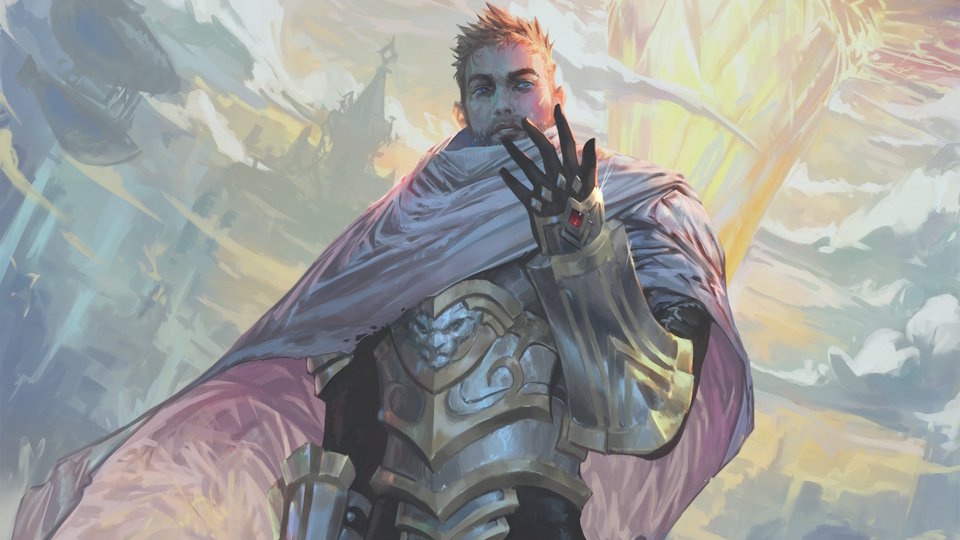
Humans are the most widespread people in Eldareth. Their communities can be found in nearly every region, from the coasts of Celaine to the villages of the Northern Highlands.
There is no single human culture. Language, religion, clothing, food, government, and local customs can differ greatly between regions, and even neighboring settlements may maintain traditions of their own.
Because human generations are shorter than those of many other peoples, social and political changes can take hold within a relatively short period of time. Migration, war, trade, and changes in government can reshape a community within a few generations.
Identity and Culture
Humans vary greatly in appearance and custom. Regional identity usually has far more influence on how someone dresses, speaks, worships, or lives than anything shared by humans across Eldareth.
A person raised in Shen-Su may have very little culturally in common with someone from Celaine, even though both are human. In mixed regions, humans may also share more customs with neighboring elves, halflings, dwarves, or other peoples than with humans from distant parts of the world.
Shorter lifespans also affect how human communities preserve tradition. Customs that remain familiar to an elf across several generations may change substantially within the lifetime of a human grandparent. Older practices sometimes disappear, while new religious, political, or social movements can become established quickly.
Human communities also regularly adopt ideas from the people around them. Foods, clothing, building styles, religious practices, tools, and words frequently move between neighboring cultures, particularly in ports, trade cities, border regions, and settlements with mixed populations.
This exchange works in both directions. Many customs now considered typical of a particular human region have been shaped by generations of contact with other peoples.
Humans Across Eldareth
Human communities have developed throughout Eldareth, with each region shaped by its own history and surroundings.
In Celaine, many settlements have grown around coastal trade, fishing, and travel by sea. Thalmyra's Reach has been shaped by commerce and the influence of the Concord, while Shen-Su maintains traditions that developed through its own long history. Communities in the Northern Highlands have adapted their settlements, travel, and livelihoods to a much colder and more difficult climate.
These regional differences usually matter more in daily life than a broad sense of shared human ancestry. Two humans from distant parts of Eldareth may speak different languages, follow different gods, and observe entirely different customs, while having much more in common with other peoples from their own homeland.
Human settlements also differ greatly in size and government. Eldareth contains human villages, city-states, kingdoms, trade centers, and communities governed alongside other peoples, each with its own local institutions and history.
Human History
Humans have been involved in much of Eldareth's recorded history and have established settlements across most of the known world. Their expansion has brought them into frequent contact with other peoples through trade, migration, alliances, shared settlements, and conflict.
Human kingdoms and institutions have often changed considerably over time. Borders move, ruling families disappear, cities change allegiance, and new governments replace older ones. In some regions, these changes have happened several times within the span of a single elven lifetime.
As a result, human history is usually discussed in terms of particular kingdoms, regions, and cultures rather than as one continuous tradition shared by all humans. The history of Celaine, Shen-Su, Thalmyra's Reach, and the Northern Highlands belongs to very different societies, even when humans form a large part of each population.
Human Traits
Ability Score Increase. When determining your character’s ability scores, increase one score by 2 and increase a different score by 1, or increase three different scores by 1. You can't raise any of your scores above 20.
Creature Type. You are a Humanoid.
Size. You are Medium.
Resourceful. You gain Heroic Inspiration whenever you finish a Long Rest. You can expend your Inspiration to reroll any die immediately after rolling it, and you must use the new result.
You can never have more than one instance of Heroic Inspiration. If something gives you Heroic Inspiration and you already have it, you can give it to a player character in your group who lacks it.
Skillful. You gain Proficiency in two Skills of your choice.
Versatile. You gain a Feat of your choice that you and your DM agree is appropriate for the character.
Languages. Your character can speak, read, and write Common and one other language that you and your DM agree is appropriate for the character. The Player’s Handbook offers a list of languages to choose from. The DM is free to modify that list for a campaign.