
Haflings
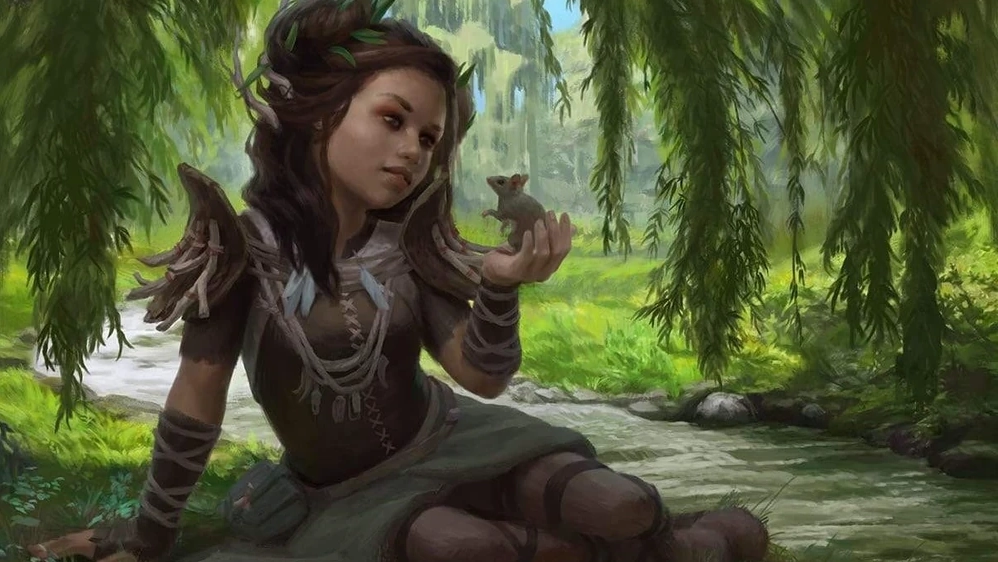
Halflings are found throughout the settled parts of Eldareth and are especially numerous in fertile regions such as Eastmarch and the lower highlands.
Many long-established communities developed around farmland, rivers, orchards, and smaller towns, though Halflings also live throughout larger settlements and cities.
Local identity is often strong. Families may remain connected to the same settlement or region for generations, while neighboring communities develop customs shaped by their own history and surroundings.
Identity and Culture
Halflings are small, with skin tones ranging from fair to warm brown. Their hair is often curly or wavy, while brown, hazel, and green eyes are common.
Agriculture remains important in many regions with large Halfling populations. Families may work the same fields or orchards for generations, passing down practical knowledge of the land alongside the property itself.
Practical care for others is valued in many Halfling communities. Food is one common expression of that care, but it can also be seen in the way travelers, neighbors, and people recovering from illness or injury are looked after. In some regions, this has contributed to strong local traditions of hospitality and healing without becoming a single formal Halfling custom.
Shared meals remain common during family gatherings and periods of seasonal work, while particular dishes and recipes may become closely associated with a household or region.
Family and local history is often preserved informally through stories passed between generations. These accounts tend to reflect the places in which a community has lived and the events that shaped it.
Halfling communities are also closely connected to the peoples around them. In mixed regions, traditions frequently develop through generations of shared work, trade, marriage, and everyday life.
Halflings Across Eldareth
Halfling communities are distributed widely rather than centered around a single homeland.
Eastmarch contains some of the largest and most established Halfling populations in Eldareth. Halflings there live throughout farming regions, market towns, mixed settlements, and larger communities alongside humans, Gnomes, and other peoples.
They can also be found throughout the lower highlands and in many other settled regions. Some communities remain strongly agricultural, while others have developed around trade, crafts, scholarship, travel, or urban life.
In places where Halflings have lived alongside other peoples for generations, their approaches to hospitality, healing, and practical community care have often become part of the wider local culture.
Halflings have repeatedly taken part in the defense of their homes and neighboring settlements when regional conflicts threatened the communities around them. Such responses are usually organized according to local circumstances rather than through a single wider Halfling military tradition.
Long settlement alongside other peoples has produced considerable regional variation. The customs of a Halfling farming community in Eastmarch may differ substantially from those of a family whose ancestors have lived in a major city for generations.
Halfling identity across Eldareth is therefore strongly shaped by place. Communities may share distant ancestry and familiar traditions while preserving histories and customs that are distinctly their own.
Halfling Traits
Ability Score Increase. When determining your character's ability scores, increase one score by 2 and increase a different score by 1, or increase three different scores by 1. You can't raise any of your scores above 20.
Creature Type. You are a Humanoid.
Size. You are Small.
Speed. Your walking speed is 30 feet.
Brave. You have Advantage on saving throws you make to avoid or end the Frightened condition.
Halfling Nimbleness. You can move through the space of any creature that is a Size larger than you, but you can't stop in the same space.
Luck. When you roll a 1 on the d20 of a D20 Test, you can reroll the die, and you must use the new roll.
Naturally Stealthy. You can take the Hide action even when you are obscured only by a creature that is at least one Size larger than you.
Hearth Magic. Choose Intelligence, Wisdom, or Charisma when you select this species. Your chosen ability is your spellcasting ability for the spells granted by this trait. Your choice can't be changed.
At 1st level, choose either Mage Hand or Prestidigitation. You know the chosen cantrip, and your choice can't be changed.
Starting at character level 3, you can cast Purify Food and Drink with this trait.
Starting at character level 5, you can cast Lesser Restoration with this trait.
You can cast each leveled spell granted by this trait once without expending a spell slot, and you regain the ability to cast that spell in this way when you finish a Long Rest. You can also cast these spells using any spell slots you have of the appropriate level.
When you cast a spell through this trait, the spell requires no Material components unless a Material component has a specified cost or is consumed by the spell. You must provide any such component as normal.
Languages. Your character can speak, read, and write Common and two other Standard Languages that you and your DM agree are appropriate for the character. The Player's Handbook offers a list of Standard Languages to choose from. The DM is free to modify that list for a campaign.