
Firbolgs
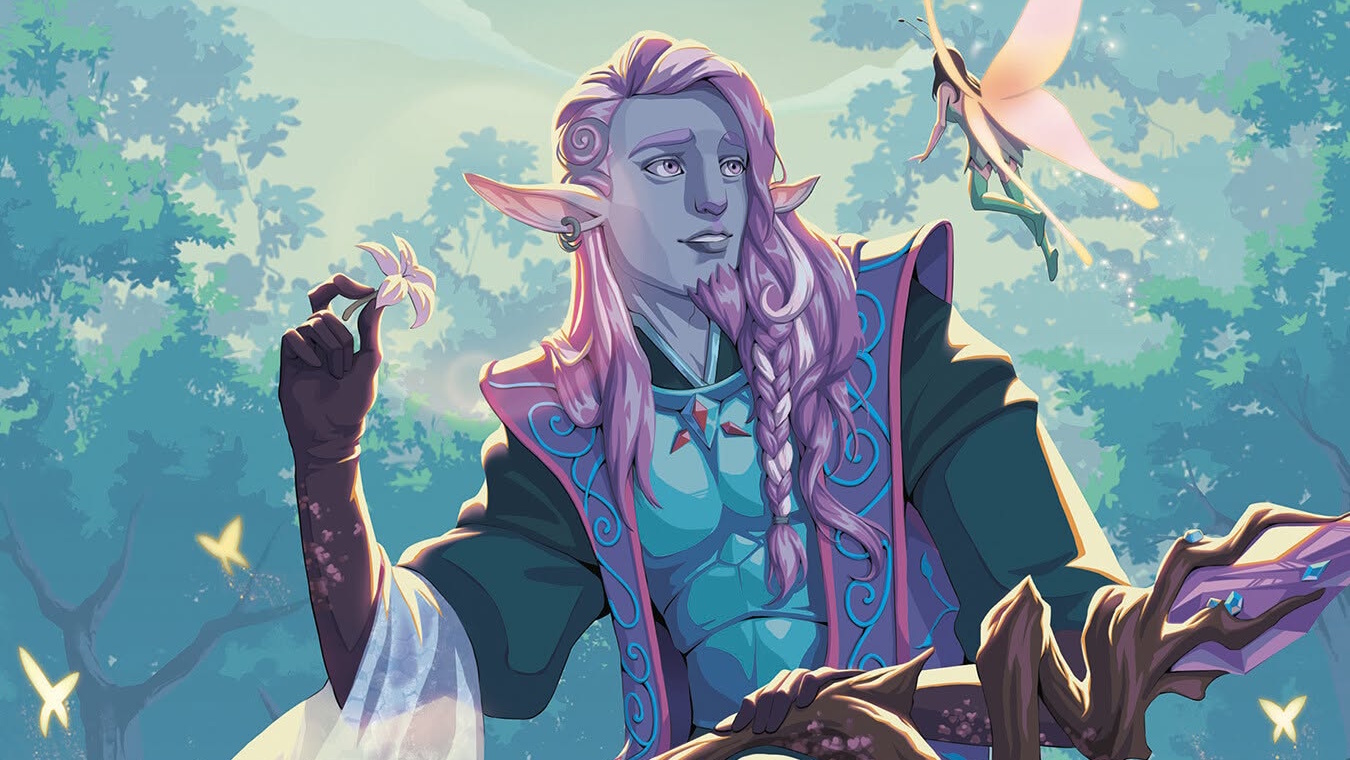
Firbolgs descend from ancient giantkin whose communities settled in remote forests and highlands. Over many generations, they developed traditions centered on caring for the land around their settlements and maintaining relationships with the spirits believed to inhabit it.
Most Firbolgs still live away from large cities. Their communities are usually small and often remain in the same region for generations, tending familiar paths, groves, water sources, and other places important to daily life.
Because outsiders encounter them infrequently, Firbolgs have gathered a number of stories around them. One common belief claims they appear when the land itself is in danger. In practice, Firbolgs usually become involved when a threat reaches their home, disrupts a place under their care, or begins affecting neighboring communities.
Identity and Culture
Firbolgs are tall and heavily built, with features that reflect their giant ancestry. Their skin is commonly brown, grey, green, or blue-grey.
Clothing is usually practical and made from materials available locally. Personal objects are often carved from wood or stone, particularly in communities where the same materials have been worked for generations.
Firbolg communities tend to have little formal hierarchy. Experienced members often take responsibility for matters they know well, while decisions affecting the settlement as a whole are discussed more widely. Authority usually depends on knowledge and trust rather than a permanent title.
Silence is treated differently in many Firbolg communities than it is elsewhere. Long pauses in conversation are normal, and people are rarely expected to answer immediately. Visitors unfamiliar with the custom sometimes mistake this for reluctance or disagreement.
Spiritual traditions are usually tied closely to the area surrounding the community. Groves, springs, old trees, caves, and other local places may carry religious or ceremonial importance, while sacred sites are generally maintained with little permanent construction.
Many Firbolgs learn skills related to healing, wilderness travel, local plants and animals, or primal magic. Some later teach these skills to outsiders, particularly when nearby communities have maintained good relations with them.
Their preference for discussion and observation can sometimes delay a response to a developing problem. Communities that are accustomed to watching conditions carefully may disagree over when a threat has become serious enough to require direct action.
Firbolgs and Neighboring Peoples
Firbolg communities generally avoid becoming deeply involved in the politics of larger kingdoms, though few are completely isolated. Many trade with nearby settlements or maintain agreements concerning shared land, roads, hunting grounds, water, or other local resources.
Druids and rangers from other cultures sometimes study with Firbolg teachers. These relationships have carried some Firbolg knowledge into neighboring communities, particularly in regions where the two have lived alongside one another for generations.
Disputes most often arise when new roads, expanding settlements, logging, mining, or other activity reaches places a Firbolg community depends upon. Negotiation is usually attempted first, especially when the people involved are established neighbors rather than strangers.
Relations can remain close for generations when agreements are respected. Some Firbolg communities maintain regular trade or seasonal contact with the same nearby settlements for longer than either side can easily trace.
History and Memory
Firbolgs preserve much of their history through oral tradition and physical markers maintained by the community. Stories are passed between generations alongside places and objects connected to the events they describe.
Some groves contain trees planted for particular people or important events. Other communities use carved stones, staffs, or similar objects to keep those memories tied to something that can be maintained and passed on.
This has produced many separate local histories rather than a single Firbolg historical record. Communities may share a distant giantkin ancestry and similar customs while knowing far more about the history of their own valley, forest, or highland than about Firbolgs living elsewhere.
Firbolg influence is most visible in regional druidic traditions and in places where their communities have long helped manage relations between neighboring settlements and local spirits. Their history has largely remained tied to these individual communities rather than to large states or centralized institutions.
Firbolg Traits
Ability Score Increase. When determining your character’s ability scores, increase one score by 2 and increase a different score by 1, or increase three different scores by 1. You can't raise any of your scores above 20.
Creature Type. You are a Humanoid.
Size. You are Medium.
Speed. Your walking speed is 30 feet.
Firbolg Magic. You can cast the Detect Magic and Disguise Self spells with this trait. When you use this version of Disguise Self, you can seem up to 3 feet shorter or taller. Once you cast either of these spells with this trait, you can’t cast that spell with it again until you finish a long rest. You can also cast these spells using any spell slots you have.
Intelligence, Wisdom, or Charisma is your spellcasting ability for these spells when you cast them with this trait (choose when you select this race).
Hidden Step. As a bonus action, you can magically turn invisible until the start of your next turn or until you attack, make a damage roll, or force someone to make a saving throw.
You can use this trait a number of times equal to your proficiency bonus, and you regain all expended uses when you finish a long rest.
Powerful Build. You count as one Size larger when determining your carrying capacity and the weight you can push, drag, or lift. You also have Advantage on any Saving Throw you make to end the Grappled condition on yourself.
Speech of Beast and Leaf. You have the ability to communicate in a limited manner with Beasts, Plants, and vegetation. They can understand the meaning of your words, though you have no special ability to understand them in return. You have advantage on all Charisma checks you make to influence them.
Languages. Your character can speak, read, and write Common and one other language that you and your DM agree is appropriate for the character. The Player’s Handbook offers a list of languages to choose from. The DM is free to modify that list for a campaign.