
Elves
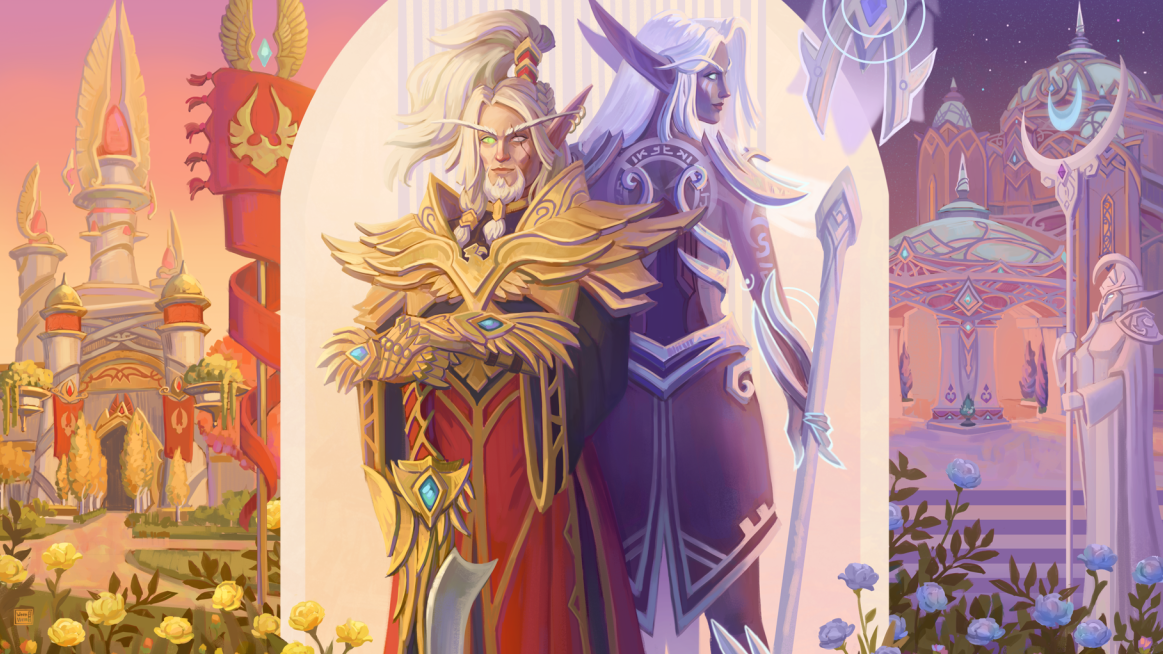
The elves of Eldareth share a common ancestry in the Feywild, though their lineages have followed very different paths. The Vaela'drin and Falha'drin left during the First Elven Exodus, the Sera'drin followed much later during the Second, while the ancestors of the Ela'drin remained in the Feywild and continued developing there.
Those long periods of separation shaped each lineage differently. Their religions, customs, magical traditions, and relationships with the Feywild reflect histories that sometimes diverged for thousands of years.
Religion varies considerably between them. The Vaela'drin and Falha'drin maintain the strongest connection to Lerathae, goddess of prophecy, moonlight, and dreams. The Sera'drin more commonly worship Io or Ao, while Ela'drin traditions often center on Archfey and other powers of the Feywild rather than the deities most commonly worshipped in Eldareth.
The four lineages remain distinct, but contact between them has grown over time. Shared institutions, scholarship, and renewed interest in their common origins have brought their traditions into closer contact, with Sylra'dareth among the most important places where those connections continue to develop.
Sera'drin: The Sun Elves
Sera'drin usually have skin tones ranging from pale gold and ivory to warm tan. Their eyes are commonly blue, silver, or gold and may glow faintly during spellcasting. Hair is often platinum, white, silver-blonde, or gold and is frequently worn in elaborate braids or formal styles.
Their ancestors lived around Isyl'norin, the Lake of Sorrows, where they had been entrusted with the protection of Ilyr'dor, the Heartwood Tree. Generations of studying the unusual magic surrounding the lake and tree led their scholars to develop the earliest elven traditions of wizardry, discovering that arcane magic could be systematically studied, recorded, refined, and taught.
As their scholarship and influence grew, disagreements developed both within Sera'drin society and between their communities and parts of the Seelie Court. Some favored continued allegiance, while others sought greater independence and control over the knowledge their people had accumulated. When renewed conflict among the Archfey made remaining at Isyl'norin increasingly dangerous, Midir opened a passage that allowed those who chose to leave to cross into Eldareth.
The Sera'drin emerged on Ael'delar beneath the branches of Syl'dareth and established Alven'Nathiss. Their libraries, schools, and methods of formal magical study survived the crossing and later became profoundly influential in the development of wizardry throughout Eldareth.
Formal education remains highly respected in many Sera'drin communities. Established institutions preserve records, techniques, and teaching traditions accumulated across generations, while scholarship, public service, and demonstrated skill often carry considerable social weight.
Religious practice varies between communities, though Io and Ao are the deities most commonly associated with Sera'drin worship. Temples and scholarly institutions often exist alongside one another, particularly within older settlements.
These traditions can place considerable expectations upon younger Sera'drin, especially within families with long histories in scholarship, magic, government, or public service. How individuals respond to those expectations varies considerably.
Vaela'drin: The Moon Elves
Vaela'drin commonly have pale lavender, silver-white, blue-grey, or porcelain skin. Their eyes are often opal, blue, silver, or violet. Hair usually appears in silver, grey, white, or black and is often worn long or bound with simple braids and ceremonial threads.
Their ancestors once lived in Vael'dareth, the Moonlit Grove, within the wider lands associated with Beira, the Winter Queen. Lerathae was already held in particular reverence there before the First Elven Exodus, her connection to moonlight, guidance, prophecy, and twilight resonating strongly with the community.
When conflict spread through the young Feywild and routes to safer territories began to fail, Lerathae guided the inhabitants of Vael'dareth into Eldareth. Their departure remains central to Vaela'drin religious history, and Lerathae continues to be the most widely worshipped deity among their communities.
Many Vaela'drin settlements developed near places considered sacred or magically significant. Their religious traditions frequently involve the moon, dreams, remembrance, healing, and the observation of natural cycles, with local customs varying between regions.
Healers, priests, seers, and those responsible for keeping family or community histories often hold respected positions. Ceremonies surrounding births, deaths, dreams, and remembrance are common, though their form differs between settlements.
Vaela'drin teachings often encourage patience and careful consideration before acting. Traditional stories also warn against allowing caution to become an excuse for avoiding a decision that can no longer be delayed.
Their ancestral home still survives in the Feywild. Much of Vael'dareth was preserved after their departure, and later fey communities settled among its old structures and sacred places. For modern Vaela'drin, it remains an ancestral home that endured even after its original people were gone.
Falha'drin: The Shadow Elves
Falha'drin usually have charcoal, violet, grey, or muted rose skin. Their eyes commonly appear silver, dark blue, violet, or red. Hair is often white, grey, black, or pale lavender and may be worn with ribbons, bands, or other items connected to family or community.
Their ancestors lived in Falha'neir, the Midnight Glade, another elven community within Beira's wider lands. Falha'neir stood closer to the contested reaches of the region and suffered more directly when conflict spread through the Feywild. Lerathae led its inhabitants out alongside the ancestors of the Vaela'drin.
The two peoples therefore share much of their early history and religious tradition. Lerathae remains widely worshipped among the Falha'drin, though their communities developed customs and institutions of their own during the centuries that followed.
Historical records are given considerable importance. Wars, failed agreements, political mistakes, and other difficult events are preserved rather than removed from official histories, with the expectation that later generations should be able to study what happened and why.
This tradition has given historians, archivists, judges, and other keepers of public records an important place in many Falha'drin communities. Old testimony and agreements may still influence decisions centuries later, which can preserve useful precedent but can also keep disputes alive long after the people who began them are gone.
Family records are often maintained with similar care. Letters, legal decisions, personal accounts, and objects connected to important events may remain in a household or clan archive for generations.
Unlike Vael'dareth, Falha'neir did not survive the early conflicts intact. The territory was later reclaimed, but the old settlement was never fully restored. Its foundations, paths, standing stones, and sacred sites remain scattered through the forest among later growth and newer fey occupation.
Ela'drin: The Faeborne Elves
Ela'drin are the descendants of elven communities that remained in the Feywild when the Vaela'drin, Falha'drin, and later Sera'drin departed. Their continued relationship with the plane has left them the most visibly fey of the elven lineages.
Their appearance changes naturally according to the seasonal aspect they currently express. Spring forms may show floral colors, green tones, or features resembling new growth. Summer forms tend toward warmer skin and hair colors, while autumn commonly brings copper, red, amber, and brown. Winter forms may have pale skin, white hair, or markings resembling frost.
Their eyes, hair, complexion, and other features can shift as their seasonal aspect changes. These changes are part of Ela'drin physiology and are not a form of deliberate shapechanging.
Ela'drin culture is highly varied. Their communities can be found among Seelie, Unseelie, and Courtless societies, and they should not be understood as belonging to a single kingdom, court, or political tradition. Thousands of years within different parts of the Feywild have produced considerable differences between communities.
Their religious and spiritual practices vary for the same reason. Many maintain relationships with Archfey, local fey powers, or traditions rooted in particular places and agreements rather than worshipping the deities commonly followed across Eldareth.
Seasonal change also appears in Ela'drin clothing, celebrations, customs, and social etiquette. The importance given to each season differs between communities, and not every Ela'drin interprets their seasonal nature in the same way.
Significant numbers have only begun settling permanently in Eldareth within the last several generations. Their reasons differ. Some seek relatives or ancestral history, some wish to understand the societies created by the elves who left the Feywild, and others have come in search of opportunities or simply because they prefer life in Eldareth.
This renewed contact has created considerable interest among all four lineages. Ela'drin communities preserve names, customs, stories, and versions of events that disappeared from Material Plane traditions long ago, while much of the history and culture familiar to the other elven peoples developed after their ancestors had already left the Feywild.
Neither side therefore represents an unchanged version of their common past.
Elves Across Eldareth
Thousands of years of separation have ensured that there is no single elven culture.
The Vaela'drin and Falha'drin have lived in Eldareth since the First Elven Exodus, while the Sera'drin arrived much later and established Alven'Nathiss around traditions carried from Isyl'norin. Their relationships developed gradually, particularly in places such as Ael'delar, which became an important meeting ground between the different elven peoples.
Shared institutions have become increasingly common without erasing those differences. Sylra'dareth is one of the clearest examples, bringing together scholars and traditions from several elven cultures.
The recent arrival of the Ela'drin has added another layer to that exchange. Records and oral histories preserved in the Feywild sometimes support histories already known in Eldareth and sometimes preserve entirely different accounts of events the Material lineages remember only imperfectly.
Religion remains one of the clearest distinctions. Vaela'drin and Falha'drin traditions retain strong ties to Lerathae, Sera'drin communities more commonly look to Io and Ao, while Ela'drin practices often remain rooted in the varied powers and customs of the Feywild.
What the four lineages increasingly share is an awareness that their separate histories began from related peoples. That recognition has encouraged closer ties without requiring them to surrender the cultures that developed during their long separation.
Common Elf Traits
Combine the following traits with the traits associated with the lineage you select.
Ability Score Increase. When determining your character's ability scores, increase one score by 2 and increase a different score by 1, or increase three different scores by 1. You can't raise any of your scores above 20.
Creature Type. You are a Humanoid. You are also considered an elf for any prerequisite or effect that requires you to be an elf.
Size. You are Medium.
Speed. Your walking speed is 35 feet.
Darkvision. You can see dim light within 60 feet of yourself as if it were bright light, and in darkness as if it were dim light. You discern colors in darkness only as shades of gray.
Fey Ancestry. You have advantage on saving throws you make to avoid or end the Charmed condition on yourself.
Keen Senses. You have proficiency in the Perception skill.
Trance. You don't need to sleep, and magic can't put you to sleep. You can finish a Long Rest in 4 hours if you spend those hours in a trancelike meditation, during which you retain consciousness.
Languages. Your character can speak, read, and write Common and one other language that you and your DM agree is appropriate for the character. The Player's Handbook offers a list of languages to choose from. The DM is free to modify that list for a campaign.
Ela'drin Traits
Fey Step. As a Bonus Action, you can magically teleport up to 30 feet to an unoccupied space you can see. You can use this trait a number of times equal to your Proficiency Bonus, and you regain all expended uses when you finish a Long Rest.
When you reach 3rd level, your Fey Step gains an additional effect based on your season. If the effect requires a saving throw, the DC equals 8 + your Proficiency Bonus + your Intelligence, Wisdom, or Charisma modifier (choose when you select this race):
-
Autumn. Immediately after you use your Fey Step, up to two creatures of your choice that you can see within 10 feet of you must succeed on a Wisdom saving throw or be Charmed by you for 1 minute, or until you or your companions deal any damage to the creatures.
-
Winter. When you use your Fey Step, one creature of your choice that you can see within 5 feet of you before you teleport must succeed on a Wisdom saving throw or be Frightened of you until the end of your next turn.
-
Spring. When you use your Fey Step, you can touch one willing creature within 5 feet of you. That creature then teleports instead of you, appearing in an unoccupied space of your choice that you can see within 30 feet of you.
-
Summer. Immediately after you use your Fey Step, each creature of your choice that you can see within 5 feet of you takes fire damage equal to your Proficiency Bonus.
Seasonborne Gift. While attuned to a season, you gain an additional passive benefit:
-
Autumn. You have advantage on Charisma (Persuasion) checks.
-
Winter. You have resistance to Cold damage.
-
Spring. When you use the Help action to aid an ally's ability check or attack, your target also gains 1d4 Temporary Hit Points. These hit points last until the end of their next turn.
-
Summer. You have advantage on saving throws against being Grappled or Restrained.
Mask of the Wild. You can attempt to hide even when you are only lightly obscured by foliage, heavy rain, falling snow, mist, and other natural phenomena.
Trance. Whenever you finish your trance, you can change your season, on top of the other benefits that a trance provides.
Vaela'drin Traits
Blessing of the Moonmaiden. You know one of the following cantrips of your choice: Dancing Lights, Light, or Sacred Flame.
When you reach 3rd level, you can cast Sleep once, and it recharges after a Long Rest. When you reach 5th level, you can cast Invisibility (Self Only) once, and it recharges after a Long Rest. You can also cast either of those spells using any spell slots you have of the appropriate level.
Intelligence, Wisdom, or Charisma is your spellcasting ability for these spells when you cast them with this trait (choose when you select this race). None of these spells require spell components when you cast them with this trait.
Incisive Sense. You have advantage on Insight checks.
Falha'drin Traits
Blessing of the Moonmaiden. You know one of the following cantrips of your choice: Dancing Lights, Light, or Sacred Flame.
When you reach 3rd level, you can cast the Faerie Fire spell once with this trait and regain the ability to do so when you finish a Long Rest. When you reach 5th level, you can cast the Darkness spell once and regain the ability to do so when you finish a Long Rest. You can also cast either of those spells using any spell slots you have of the appropriate level.
Intelligence, Wisdom, or Charisma is your spellcasting ability for these spells when you cast them with this trait (choose when you select this race). None of these spells require spell components when you cast them with this trait.
Superior Darkvision. Your Darkvision has a range of 120 feet instead of 60 feet.
Sera'drin Traits
Arcane Affinity. You know one cantrip of your choice from the Wizard spell list.
When you reach 3rd level, you can cast the Detect Magic spell once with this trait and regain the ability to do so when you finish a Long Rest. When you reach 5th level, you can cast the Mirror Image spell once and regain the ability to do so when you finish a Long Rest. You can also cast either of those spells using any spell slots you have of the appropriate level.
Intelligence, Wisdom, or Charisma is your spellcasting ability for these spells when you cast them with this trait (choose when you select this race). None of these spells require spell components when you cast them with this trait.
Arcane Acuity. You have advantage on Arcana checks.